Neolithic
EXPOSICIÓN ARQUEOLÓGICA MUNICIPAL
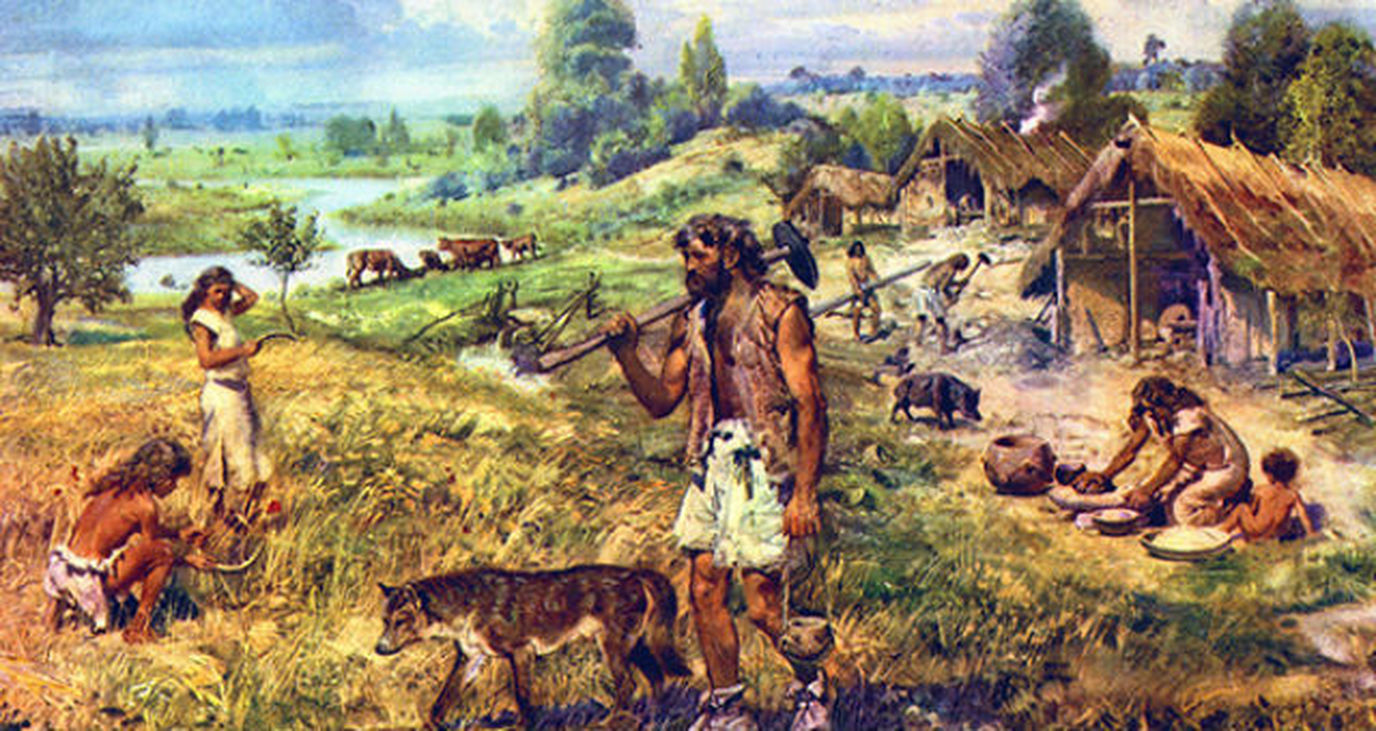
Historically, the Neolithic was one of the most important stages in the evolution of humanity (around 6000–3000 BC), representing the beginnings of sedentary life or settlement in stable places (villages), as well as the development of agriculture and livestock farming. Other important advances included the invention of pottery and polished stone tools (hence the name Neolithic, meaning “New Stone Age”).
Today, it is believed that groups of hunter-gatherers gradually incorporated certain domestic plant and animal species. Over a slow process that may have lasted around two thousand years, these changes eventually produced long-term effects that were incompatible with the lifestyle of hunter-gatherers. Agriculture was possibly the result of the continuous observation of natural phenomena. Over the centuries, men and women learned that certain seeds buried in the ground would germinate after some time. Among the first cultivated species were cereals (wheat, barley, millet, etc.) and legumes (lentils, peas, etc.).
Something similar happened with livestock farming. Observing the animals around them (goats, sheep, pigs, etc.), with which they shared scarce water sources and rivers, facilitated their domestication. The beginnings of animal husbandry are linked to the custom of raising captured animals as a food reserve for days when hunting was insufficient.
At that time, people lived in huts and cabins that were not very durable. Archaeological remains include concentrations of stones, large silos dug into the ground, fragments of red-painted pottery, and other findings to which, in a later phase, decorated dishes, bowls, and large storage containers characteristic of the Chalcolithic period were added, together with flint tools (blades, scrapers, etc.), stone axes and adzes, and some personal ornaments such as limestone bracelets.
Likewise, on a smaller scale, all these changes gave rise to other phenomena that remain important today: the trade of products and the emergence of social inequalities resulting from the enrichment of certain people who controlled the new economic system.
The need to store, transport, and cook food encouraged the development of pottery, which was handmade and fired directly in the fire.